Blood of the Oak by Eliot Pattison
14 December, 2016
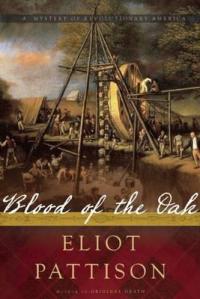
Some of you may recall my love of Eliot Pattison’s Tibetan mysteries beginning with The Skull Mantra featuring Inspector Shan, a disgraced Chinese policeman exiled to Tibet. Pattison’s use of the mystery genre to convey the beauty and tragic history of Tibet is one of the few series that manages to portray the fierce resilience and compassion of the Tibetan people in the face of annexation and oppression. Pattison is also the author of a series set in colonial America before independence and I was keen to try it.
Blood of the Oak is the fourth volume of Pattison’s Bone Rattler series and features Duncan McCallum, an indentured Scot in colonial America. It is 1765 and Duncan, now living in Edentown with his partner Sarah Ramsey and his friend Conawago, a Nipmuc, is summoned by Adanahoe, an Iroquois elder, to investigate the theft of a sacred mask. Having earned their trust and because of his medical training, Duncan is known by the Iroquois as the Death Speaker, a rarity amongst the Europeans.
America is in the throes of conflict, a burdgeoning sense of independent identity is forming amongst a small group of influential men and women and resistance is growing against the English and the French who are keen to lay claim to the rich lands held sacred by the Native American tribes. They find themselves caught in the middle, used and discarded by both sides, wary of the Europeans, desperate to protect themselves. When Duncan’s search for the mask leads him to an injured ranger, his friend Patrick Woolford, he realises he has stumbled upon another mystery. When Woolford tells him 19 men have gone missing from Benjamin Franklin’s fledgling communications network including some of his own rangers, Duncan knows they are facing an incredibly clever and terrible foe. For Woolford, like Duncan and the Iroquois, is an expert in navigating the forests.
As the powerful elite in England try to cement their control over their wayward colony through the Stamp Tax, Duncan is drawn into the power play that threatens everything he holds dear. As he begins his journey with his friend Tanaqua, a Mohawk, and Analie, a French orphan, to try and prevent the brewing catastrophe, he will come face to face with evil from his past. What is at stake here is not just the lives of those dear to him but the state of the nation itself. But where there is evil, there will be resistance and Duncan finds himself in the midst of those who are willing to put aside differences to fight together for their rights.
As well as tackling the complex nature of the different resistance groups supporting the revolutionary cause, the sheer number of people who risked their lives from the Scottish, the English, all the Native American tribes and the African American community, from the freedmen to those struggling under the chains of slavery, Pattison draws an intricate portrait of colonial America and the high stakes involved. The fragility of freedom, the long yoke of servitude and indenture, the indignities, torture and injustice suffered by so many because of the misplaced belief that one race, one people, one class can be better than another is a polemic that is familiar and should still be feared today. And that the only way to overcome the odds is to work together towards a common goal which Pattison shows beautifully.
Like his Tibetan novels, Pattison pulls off an intricate mystery while building a world in which historical figures come alive. The complexity of his characters, each with a difficult past, each making their own hard choices, show how tough it was to survive in the new land. And yet within such chaos also lie scenes of stillness and beauty, of the power and sanctity of nature, the importance of belief and worship, and ultimately what ties you to your identity. Pattison excels in creating a story that combines mystery with politics, history and adventure, but what I like best about his novels are his compelling characters. Although some of the characters may be a little too cut and dry, especially the antagonists, Pattison avoids too much stereotyping by including a whole spectrum of characters and he doesn’t shy away from showing the ugly side of society in each community. And like his Tibetan novels, making an outsider, in this case Duncan, the central character makes it work. It certainly sets one thinking about how history and cultures are recorded and by whom.
Although this novel could be read as a standalone, I enjoyed it so much that as soon as I finished it, I ordered the rest, Bone Rattler, Eye of the Raven and Original Death. As much as it is a mystery, it is also a love letter to the Native American tribes as well as the exiled Scots who only wanted a place in which to live free.
My knowledge of Native American history is pretty much limited to James Fenimore Cooper’s oft-criticised The Last of the Mohicans set in the same period, and reading this has re-awakened my interest. As well as the bibliography in Blood of the Oak, I have Bury My Heart at Wounded Knee by Dee Brown and The Absolutely True Diary of a Part-Time Indian by Sherman Alexie and any further recommendations would be greatly welcome.
I would like to thank Eliot Pattison for kindly offering me this book for review. He was right in saying this was a topical and timely read, especially in the wake of recent world events. It would do America and the rest of the world good to go back and re-assess the reasons why people fought so hard for independence in so many countries around the world and that we mustn’t forget that liberty, equality and justice are rights we cannot afford to discard.

Your humble servant is no longer in any doubt that a secret society of death-worshippers has been established in Moscow, following the example of several other European cities: a society of madmen – and women – who are in love with death. The spirit of disbelief and nihilism, the crisis of mortality and art and, even more significantly, that dangerous demon who goes by the name of fin de siècle – these are the bacilli of the contagion that has produced this dangerous ulcer.
The eighth book in Boris Akunin’s Erast Fandorin mystery series follows an impressionable young girl from the tedium of Irkutsk to the bohemian glamour of Moscow with a quatrain in her hand and a small suitcase. Marya Mironova has cast aside her former life and name and is transformed into Columbine, following her lover (or soon to be) Petya whom she has named in her heart, Harlequin. And so begins the part-epistolary She Lover of Death in the form of newspaper clippings detailing the strange phenomena of suicides by young Muscovites, Columbine’s journal entries as she is initiated into a secret society worshiping death and spearheaded by enigmatic Prospero to whom she promptly loses her virginity. As each member of the Lovers of Death yearns to be chosen next, a mysterious stranger with a stammer joins the society under the alias Prince Genji. But as the deaths add up, it soon becomes clear that each Lover of Death is being helped along his or her way. Although Columbine is desperate to meet her lover (Death), her faith in her fellow society members is slowly eroded as she gets closer to Genji who begins to sow doubt on the whole enterprise.
Of course, we know Genji is Erast Fandorin but the emphasis is strictly on Columbine and her dramatic take on her life and prospective death. In some ways She Lover of Death is less about the mystery of who is directing the killings than about the lure of bohemianism and the intense decadence of feeling alive in the face of death. Akunin has previously stated that he is deliberately writing each mystery as to mimic a certain style in the genre. And this volume certainly shows up the romantic allure of death in all its gothic glory which was so popular in fin de siècle European aesthetic. Prospero is reminiscent of Rasputin in his spellbinding ways and allure towards women and as Fandorin gets closer to who is behind the killings, will Columbine be strong enough to shake off her enchantment? As always, Akunin delivers an interesting view of Russian history and culture and the different style in each novel is a bonus boost in keeping us a captive audience.

The next volume in the series, He Lover of Death, is down and dirty Dickensian with a dash of melodrama, the protagonist reminiscent of the Artful Dodger fleeing poverty to join a gang in the Khritrovka district of Moscow. It is here that Senka Skorikov meets and falls in love with Death, the beautiful mistress of the Prince who heads one of the most notorious Muscovite gangs. Death can sway all men and is also the cause of their demise. But this makes her even more irresistible. When Senka stumbles upon a hoard of lost silver, he manages to claw his way out of poverty but in doing so finds himself on the run from the gangs that rule Moscow and corrupt policemen who are out for a cut. It is only when he stumbles upon Erast Fandorin and his Japanese manservant Masa who have returned to Moscow and are independently investigating a number of savage deaths that may have links to the gangs that he has a chance of survival and his life truly changes.
He Lover of Death had a very slow start and I admit it took me a couple of tries to get into this novel. However, the pace picked up after Fandorin turns up as the mystery of the deaths and the origins of the silver hoard are revealed. There are villains aplenty and lots of talk of love and honour. Fandorin, as usual, is as eccentric and mysterious which is why we find him so intriguing and he is as susceptible to Death’s charms as any man. Masa features a bit more in this volume, teaching Senka his Buddhist philosophy and defensive arts. I found their interactions highly enjoyable although the way Akunin reduces Masa’s speech in Russian/English to a stereotypical bad accent began to feel rather offensive. We all know he speaks Russian with an accent so is it really necessary to make is so Fu Manchu-esque? It my have been the norm before but we no longer live in a society that finds this acceptable. I never used to find these things offensive since we all know not all nations are equally cosmopolitan in their immigration policies, however, the internet has opened my eyes to different shades of ignorance and for someone as culturally sophisticated as Akunin, it’s a little disappointing.
Apart from that one annoying detail which occurred a lot since Masa featured a lot in this novel, I still love Akunin’s work. I think he’s creating something playful, informative and well written in a genre that can sometimes feel formulaic. The next volume in the series is The Diamond Chariot set in Japan where I hope we’ll get to find out more about how Fandorin and Masa met. There are still four more volumes available in Russian and the next one is being translated into English. Hurray!
Some literary news and events
27 April, 2016
Although I haven’t been posting much, I have been busy reading and attending lots of literary events.
This year kicked off with Han Kang talking about her astonishing novel The Vegetarian and celebrating the publication of her new book Human Acts at Foyles. I’m still gathering my thoughts in order to write about The Vegetarian and may have to do a re-read just because it’s so brilliant. I’ve chosen Human Acts as this month’s book group read for Riverside Readers so I’m really looking forward to getting stuck in. She was incredibly composed and collected and I definitely need to hear more from her.
Then I went to see Hanya Yanagihara’s at Foyle’s to celebrate the publication of her Booker Prize shortlisted A Little Life. I have yet to read the book which almost everyone I have met has ferociously recommended but I do have my copy ready. What was interesting was that at the talk, almost everyone had read it and was fangirl/boying over her. Considering the length and darkness of the book, I think that’s amazing. Yanagihara was so smart and vibrant and witty and I want to be her friend.
Then I went to Asia House to see Paul M.M. Cooper introduce his debut novel Rivers of Ink, a historical novel set in 5th century ancient Sri Lankan capital of Polonnaruwa. I don’t think I’ve read a novel set in Sri Lanka’s historical past since Colin de Silva’s Winds of Sinhala series in the 80s so I’m really looking forward to reading this. Cooper, who is currently in the throes of his PhD in Creative Writing at UEA had spent time in Sri Lanka and even learnt Sinhala – colour me impressed.
I also went to see Joanna Walsh in conversation with Claire Louise Bennet about their new novels Hotel and Pond at the London Review of Books Bookshop. Both were fascinating and I loved Hotel. It’s incredibly exciting for me to come across writers who deconstruct women’s lives in new and intellectually stimulating ways that are just outside conventional social norms.
I also attended a bloggers’ brunch to celebrate the Wellcome Book Prize shortlist chaired by Simon Savidge and with the shortlisted authors, Suzanne O’Sullivan for It’s All In Your Mind, Alex Phelby for Playthings, Amy Liptrot for The Outrun, Cathy Rentzenbrink for The Last Act of Love (Steve Silberman for Neurotribes and Sarah Moss for Signs for Lost Children were unable to attend that day). It was lovely to meet and catch up with other book bloggers some of whom I’ve known for a while now. I still think it’s wonderful to hear authors speak of their work as it makes you want to read books that you might not otherwise pick up. I found It’s All In Your Mind , which aims to demystify psychosomatic illnesses, incredibly compassionate and well-written and was really pleased to hear it won the Wellcome Book Prize for 2016.
And finally, I went to see my favourite Russian writer Boris Akunin talk about his Fandorin books and Japan at Asia House as part of their Georgia25 week celebrating Georgia’s independance. I’ve started his last one translated into English, The Diamond Chariot, which has a Japanese focus and loving it as usual. Akunin is such an intelligent, witty and self-deprecating man with such wide-ranging interest in almost everything. He spoke of one of his more disapproving critics (Putin) and how although he is ethnically Georgian, he has always lived in Moscow and wrote in Russian and how being cast into the perpetually alternating role of patriot/traitor can wear him out. He even spoke to me in Japanese when he heard my name and assured me that there is another Fandorin title being translated into English. Hurray!
Phew, that was a long list, right? So what have you all been up to? Any interesting books and authors I need to check out?
Film: Dheepan
8 April, 2016
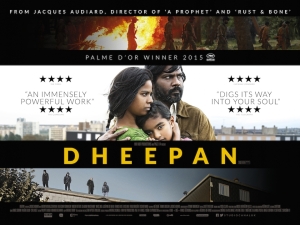
Winner of the 2015 Palme d’Or in Cannes, Dheepan tells the story of Sivadhasan, a former soldier fighting for the Tamil Tigers, who assumes the name of Dheepan along with a fake family, 26-year old wife Yalini and 9-year old daughter Illayaal, in order to escape the conflict zone in northern Sri Lanka and start a new life in France. All three have lost family, are alone and need each other in order to apply for asylum in France. Yalini dreams of crossing over to England where her relatives live in peace but Dheepan is eager to settle down and needs his constructed family in order to secure a living. That they are relocated to a housing project in Le Pré-Saint-Gervais, a northeastern suburb of Paris, swapping one conflict zone for another doesn’t faze him as he goes about his job as a caretaker for the block of flats. But both Yalini and Illayaal struggle in their new job and school. As well as pretending to show they are a family, they also struggle to communicate in French, a language in which only Illayaal is becoming fluent, depending on her translation to get by. As they slowly adjust to their new life, a grim reality far removed from their expectations, the gang violence which has been simmering under the surface of the housing project explodes, threatening to break their hard-won, fragile peace.
I was expecting a dark and depressing film about the horrors of the Sinhala-Tamil conflict transposed to the violent and terrifying banlieues of suburban Paris. But what I got was a beautiful, still film exploring the core values of family and belonging, strengthened by the extreme horrors faced and overcome by people. The Sinhala-Tamil conflict provides the backdrop from which Dheepan and his makeshift family spring into the contemporary and relevant refugee crisis facing Europe today; they are but one of many fleeing conflict to come to Europe believing it would provide a safe haven in which to start new lives. The desperation which drives them to undergo such a dangerous journey, the difficulties that arise once they reach their new country, the language barrier, the hostility and disinterest, make you re-assess your views on asylum seekers. That they dream of going back knowing there is nothing left of their old lives, the pain of having lost loved ones, their determination to carry on, all of this is shown beautifully in Jacques Audiard’s stark, spartan film. Nothing is over-emphasised or over-sentimentalised, nothing heavily pushed onto the viewer.
Surprisingly, and probably what makes the film work, is that it chooses to steer clear of the complex politics of the Sinhala-Tamil conflict instead focussing on the personal and Dheepan’s relentless need to escape, to find normality in a world that has gone crazy.
I loved how the makeshift family slowly coalesces and becomes a real one. Yalini’s cry that she isn’t Illayaal’s mother and her reluctance to look after her. Illayaal’s need for comfort in a cold, unfamiliar world of strangers. And Dheepan’s awakening interest in Yalini. You wouldn’t expect such a family to work, not with the anxiety accompanying the situation. But it slowly does and you feel for all of them. But while their ties grow stronger, the world outside grows ever more violent, once again putting their lives at risk.
What was particularly striking was the grim urban reality in which Dheepan and his family land in suburban Paris. It is nothing like what they were expecting, where the poor, mainly immigrant communities, noticeably absent from the centre of Paris, are trying to eke out a living. Although the Sri Lankan parts of the film didn’t seem as stereotyped perhaps because the scenes were shorter, those set in Le Pré-Saint-Gervais did feel a little reminiscent of films like Banlieue 13 and Le Haine with perhaps a slight romanticisation of gang life. But Dheepan, once a child soldier, is unafraid and eventually manages to wrestle a bit of autonomy in the housing project but this too seems a little unrealistic. With exceptional performances by Sri Lankan novelist turned actor Antonythasan Jesuthasan in the titular role, whose past mirrors that of Dheepan, South Indian stage actor Kalieswari Srinivasan as Yalini, French-born Claudine Vinasithamby as Illayaal and Vincent Rottiers as gang leader Brahim, these are but minor points in what is almost a perfect film.
You can read interviews of Audiard in the Guardian here and the Los Angeles Review of Books here.
I was kindly invited to a screening of Dheepan which is out in cinemas today. I strongly urge you to watch it.
For Two Thousand Year by Mihail Sebastian
7 April, 2016
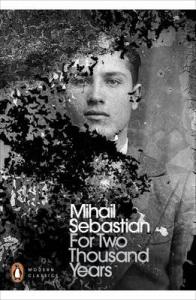
You can find my review of Mihail Sebastian’s beautiful novel For Two Thousand Years in Issue 9 of Shiny New Books! out today. Please do go and have a look!
Deadly Election by Lindsey Davis
30 March, 2016
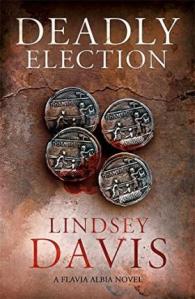
As you all probably know, I am a huge fan of Lindsey Davis’ Falco series set in Vespasian’s Rome. Her follow-up series with Falco’s adopted British daughter Flavia Albia, though a little darker in tone due to Rome being under the brutal thumb of Domitian, has firmly hit its stride.
In her third outing, Deadly Election, Albia is caught in the middle of a Roman election whilst trying to identify a decomposing corpse that falls out of a locked chest from Pompeii belonging to Callistus Valens in the middle of a highly publicised auction at her family’s auction house. Together with her new friend and magistrate Manlius Faustus, currently campaign manager for his childhood friend Vibius who is standing for the office of aedile at the elections, Albia delves deeper into the mystery of the dead body found bound and stuffed into the chest. As she unravels the strangely intricate familial ties between the sellers of the chest of death and the various electoral candidates, she comes up against a formidable political family headed by Julia Verucanda, ‘the mother-in-law from Hades’. As the death count mounts in the hot July summer, Albia and Faustus find themselves caught in a deadly web that spans generations.
Once again, Davis has delivered a highly enjoyable and educational mystery. I raced through Deadly Election as with all her other books, stopping once in a while to wonder at her deft characterisation and her beautiful rendering of a living, breathing ancient Rome. You can see how much she loves Rome with all its complex social hierarchies, variety of peoples from all over the empire and the deadly politics that underpinned Roman life. I love the characters of Albia, who is a mature, independant woman who has seen enough of the harshness of life to appreciate what is truly precious, and Faustus, a serious, upright citizen with a soft spot for Albia. I like a bit of romance in my mysteries and Davis has drawn this one out long enough for you to care about both characters. Domitian doesn’t make an appearance here but he is always present, a constant threat in people’s lives.
If you haven’t tried Davis’ mysteries, I urge you all to start. I like reading a series in order so would recommend you start with The Silver Pigs. However there are over 20 mysteries in the Falco series which are all separate mysteries but follow a slow chronological arc where you see the evolution of his relationships and family. Part of the joy of reading a series is seeing how the characters develop, and Davis is particularly good at this.
If you want to start with Flavia Albia’s series, that is fine too, although I feel you will enjoy it more from dipping into some of the books in the Falco series first. The titles in the Flavia Albia series so far:
As Chimney Sweepers Come to Dust by Alan Bradley
22 March, 2016
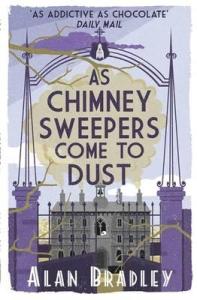
Alan Bradley’s seventh novel featuring the magnificent 11 year old chemist Flavia de Luce comes after the satisfying conclusion of a six book long story arc which culminated in the revelation of Flavia’s mother, Harriet’s, fate. This led to Flavia being inducted into some special secrets and what she sees as her ‘banishment’ from her beloved home, Buckshaw, in the lovely English village of Bishop’s Lacey. We start As Chimney Sweepers Come to Dust with Flavia reluctantly on her way to Harriet’s old boarding school, Miss Bodycote’s Female Academy in Canada, to be finished.
The night Flavia arrives at Miss Bodycote’s, she is rudely awoken by a fellow student quickly followed by a dessicated corpse that comes tumbling down from her chimney wrapped in the school’s Union Jack flag. The student is taken away in shock but Flavia keeps her cool and secretes a medallion that has broken loose from the grisly corspe before she is bundled away to sleep in the Headmistress’ living room. The incident is played down and yet there are strange rumours of missing girls and ghosts. As Flavia tries to adjust to her new surroundings and get acquainted with her fellow boarders, she begins to suspect that not all is as it seems at Miss Bodycote’s. Her Aunt Felicity had sent her here to learn the tricks of the trade in order to follow in her mother’s footsteps so Flavia knows this school is nothing but ordinary. However, the air is thick with secrets and the Chemistry teacher, to Flavia’s delight, is an acquitted murderer. Will she get to the bottom of the mystery? Whose corpse is it and why does no one speak of the missing girls?
As Chimney Sweepers Come to Dust is as delightful as all the other novels in the series. Bradley’s principal characters are so well drawn that I really missed Flavia’s family in England as much as she did. Although there have been some reviews decrying Flavia’s jaunt across the pond, I really enjoyed the rarified and insular air of the girls boarding school which brought back happy memories but with all the twisted friendships and secrets that are part and parcel of boarding school life. Flavia, who normally only has her sisters and the people in her village to keep her company, is suddenly thrust into this new world in which she has to make new friends but be alert enough to know whom to trust. And for someone who likes not to be too noticeable, she is also the daughter of Harriet who is revered like a god at Miss Bodycote’s.
All of Flavia’s schoolmates were given interesting names and characters and apart from one niggling point about a missing girl which didn’t seem to be sufficiently explained, the mystery was pretty good. But what keeps drawing me back to Bradley’s creation is Flavia and her family. Flavia’s pluckiness, this time combined with a barely held back home-sickness, just made me want to go and give her a big hug. And what makes reading these books so enjoyable is you can feel how much fun the author is having writing them. I’m already looking forward to the next book in the series.
Other books in the series:
The Sweetness at the Bottom of the Pie
The Weed that Strings the Hangman’s Bag
A Red Herring Without Mustard
I Am Half Sick of Shadows
Speaking From Among the Bones
The Dead in their Vaulted Arches
Best of 2015
29 January, 2016
So we’re well into January and I’m a little late but I wanted to let you all know my favourite books of 2015. And before you go on about my sparse list of reviews last year, I did read a lot more than I wrote about and I’m hoping to recapture my lost blogging enthusiasm. Like many of my book blogging friends, I think it’s hard to balance a fulltime job, a social life and personal projects of which book blogging is one and my balance went a little askew as I had it pretty much full on last year. I also had my first reading slump since I started this blog in 2009 which I drowned with a lot of Korean dramas that left my brain in a happy but slightly lobotomised state although it did spur me on to learn Hangul and dip my toes in Korean literature (I just finished reading Han Kang’s astounding The Vegetarian and Tony has a brilliant list of suggestions). Hopefully things will be a little bit calmer this year, although every year seems to get busier and busier or am I just losing the plot and my organisational skills are becoming redundant? Who knows but as long as there are books to read and discuss, I’ll be here, maybe just not as often or on schedule.
But, even though there may have been a paucity of reviews, 2015 turned out to be a fine year for well-crafted and sublime books. I allowed myself to read titles one after another in a series which kept me immersed in the stories but also made it harder to review without giving away spoilers. I also loved many of my book group choices which can often be hit and miss as we all have very different tastes which is what makes our book group so great.
Here’s my list of twelve in alphabetical order with links to reviews. I’m hoping to review the others soon.
Blackout and All Clear by Connie Willis – I can’t tell you how much I admire and love Willis’ work. They are all clever, substantial, thrilling and with a perfect balance of darkness and humour. If you haven’t read her novels, you are missing out.
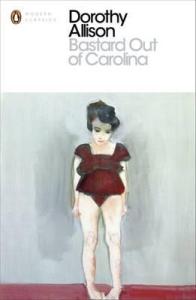
Bastard Out of Carolina by Dorothy Allison – devastating and brutal but brilliant.
Bonjour Tristesse by Françoise Sagan – my first re-read after 20 plus years and still as shocking. Takes me back to my teenage years.
Child 44 by Tim Robb Smith – clever, fast-paced and brought back my interest in the eternally complex and hypocritical construct that is the USSR.

Everything I Never Told You by Celeste Ng – beautifully written, melancholic and dream-like.
The Grass is Singing by Doris Lessing – powerful and stark debut novel from a master writer.
Hotel by Joanna Walsh – what can I say, I’m a huge fan of Walsh’s, from her illustrations to her short stories. And Hotel, as I have come to expect, simultaneously surprised and delighted me with its astute observations and wry humour. I’ve already bought an extra copy for a friend and will be buying more as gifts for other discernable readers.
My Brilliant Friend by Elena Ferrante – probably the truest depiction I’ve read of female friendship in all its complexity. I’m still in the middle of the third book of this incredible quartet as I don’t want it to end.
The Raven Boys by Maggie Stiefvater – first book in an absorbing quartet. Beautifully written and reminded me a lot of The Secret History. I read all three books that are out one after the other and cannot wait for the final volume.
Spring Snow by Yukio Mishima – gorgeous, tortured and just exquisite. I need to read the rest of books in his Sea of Fertility tetralogy.

Station Eleven by Emily St. John Mandel – this was a surprise hit for me. I didn’t enjoy it all that much when I was reading it but the story refused to leave my mind and I am still haunted by it.
True Grit by Charles Portis – incredibly tightly written and absorbing for a genre I wouldn’t normally touch with a barge pole. And with a kick-ass protagonist too.
What about you? What were your favourite books of 2015?
Bastard Out of Carolina by Dorothy Allison
11 December, 2015
We’ve certainly had a run of incredibly good books for our book group choices this year. Last month’s book, Bastard Out of Carolina by Dorothy Allison, was one I hadn’t heard of before but the cover was so gorgeous I had to go and get myself a physical copy of the book instead of a kindle download. Don’t you love it when a cover hooks you like that?
There was also a recommendation from Barbara Kingsolver, one of my favourite writers and author of The Poisonwood Bible, which also further provoked my interest and she wasn’t wrong. Bastard Out of Carolina isn’t an easy read but it is brilliant. Brilliant because Allison manages to keep the tension simmering just below the surface, occasionally unleashing it, and then dropping in scenes of such domestic love and comfort that you forget the danger that lurks just behind the half-closed door.
Set in Carolina in the 50s, Allison’s novel centres on a large white-trash family with colourful characters and histories who love and fight their way through life. Our heroine Bone is the illegitimate daughter of teenage Mama, the youngest and fairest of her large, boisterous family. There are no ends to suitors but she falls for a charmer traveling through town who vanishes as soon as she gets pregnant. Nevertheless determined to correct Bone’s birth certificate, she faces the moral contempt of self-righteous officials at the town hall who refuse to change Bone’s legal status but she keeps trying year after year. Then she falls in love and marries a sweet young man who is ready to adopt Bone but who meets with an accident and Mama is left grieving with two little girls. Forsaking love, she works at the local diner until her brother Earl brings Glen, an intense young colleague who is the outcast son of a well-to-do local family with daddy issues. Glen is patient and woos Mama over a year and she gradually falls in love with this brooding young man who has been so starved of love and decides to marry him only after he promises to love both her and her girls. Blinded by her love for him, she fails to acknowledge his many complexes, especially when he cannot hold down a steady job without getting into fights. But Glen loves her and she loves him and they both believe that it will all come together. That is until tragedy strikes.
It’s pretty early on in the novel, but this loss coincides with a shocking incident that will completely derail the reader. Up until then, you may be forgiven if you think Bastard Out of Carolina is all about big families and poverty. The novel takes a decidedly darker tone and you see what menace lurks beneath the surface. Allison tackles the fragile structures of love and families through the secrets we keep from each other. And throughout this, the crux is Bone, so young, so alone and trying desperately to keep her small, precious family from falling apart. What Allison does so brilliantly is intersperse scenes of Daddy Glen’s anger within their nuclear family with the warm, protective nature of Bone’s extended family with her larger than life aunts and uncles who would do anything to protect their kin. This doesn’t mean that they don’t have problems of their own, what with their fighting, alcohol abuse and infidelities all casting a shadow across their lives. And yet they are in stark contrast to the cold, unwelcoming family in which Daddy Glen grew up and to whom he stubbornly brings his little family once a year to visit whether they like it or not.
As a psychological study, Daddy Glen is a classic case of the youngest son who didn’t grow into his potential and who is forever trying to please his successful father and two older brothers. But the most interesting character in this novel is Mama, who stays with Daddy Glen even though she knows things are not quite right in their house. Even after witnessing his harsh punishment for Bone’s adolescent transgressions, she makes a half-hearted effort to leave him but returns when he begs for forgiveness. For Daddy Glen, Mama is the love of his life. And so it becomes even harder to understand the motives behind his actions, even if you look to his unhappy childhood.
The bits that I liked the most were those describing Mama’s family. You see her bond with her siblings, their love for each other coming through so strongly at family gatherings, holidays and over food. The colourful histories of each individual are so captivating that you wish you were a part of their brood. And yet they weren’t enough to shield Bone.
Bastard Out of Carolina, like all the best books, leaves you with even more questions at the end. It’s dark and devastating but pierced with moments of such warmth and joy, that it will remain long in your heart. The inevitable ending may be more than you can bear but what happens after will truly break your heart.
Allison says that so many of her readers have told her that she has written their story and we can see why. She gets into the head of Bone so well, putting into words the confusing, constantly shifting feelings of fear, pain and anger which a child cannot fully express. She doesn’t sentimentalise or rationalise these thoughts, she just puts them down as they are. When everything is stripped away, what remains is Bone’s resilience. Although not autobiographical, nevertheless we can see parallels to Allison’s own childhood. Perhaps what she really wanted to explore was her mother’s choices. I’m not a fan of depressing novels and I read this was trepidation, dreading what was to come, but such is the power of Allison’s writing that I couldn’t keep myself from finishing this incredible novel.
The Grass is Singing by Doris Lessing
3 November, 2015

August’s book group choice by Kim was Doris Lessing’s debut novel published in 1950, The Grass is Singing. A Nobel Prize Laureate and author of many novels including The Golden Notebook, I had heard so much about Lessing and yet felt slightly afraid to read her.
The Grass is Singing is set in Southern Rhodesia in the 1940s and begins with the murder of Mary Turner by her black servant Moses. In a land where strict racial rules are the means by which the white colonisers maintain their control, any untoward issues that don’t fit in with white society’s ideas of how people should act is quickly and unsentimentally cleared away, untouched. Mary’s murder is cleared as one catalysed by greed. But what Lessing does so beautifully here is to go back in time to find out who Mary Turner was to see why she had to die. And what unravels is a tense, bleak tale of a woman, once happy in her independance and freedom, who is gradually stifled and suffocated by society’s expectations and petty rules.
Free at last from her poverty-stricken childhood, a young Mary is living a happy and carefree life in town, working as a secretary and living in a girls hostel where she is never without friends and things to do. She is happy to carry on in this way, having no need for a husband or a house of her own until she overhears her friends ridiculing her behind her back. This sudden shock instigates a paradigm shift in her world view and sets her on a course which she may not have otherwise chosen. She is nothing if not proactive and immediately changes the way she dresses and goes on several unsuccessful dates, making her unhappy and suspicious of other people’s motives. That is until she meets Martin Turner, up in town for the day, a shy, awkward young man who spends most of his time alone working on his farm. Although they feel no attraction to each other, nevertheless, Martin is lonely and Mary needs to get married, and so this happens before they get to really know one another. Mary is happy to leave the town that has soured and Martin is eager to start a family once he has made his farm profitable and has enough money. But life on a farm in the middle of nowhere is far from the life Mary ever envisioned for herself, as is the lack of money. Martin is kind, if not stubborn, but the evergrowing failures of all his ventures quickly grinds down her respect for him. Mary is also uncommunicative and cold and Martin soon realises that his idea of a warm family life may never materialise. And yet the two continue in this vein, Mary slowly succumbing to ennui and depression as the heat gets to her, ever relentless, and her encounters with the natives who work for Martin are fraught with suspicion and trouble. The two are bound together in their wretched house, isolated, and what happens is a slow disintegration of will.
Until Moses, one of Martin’s workers, comes to work for Mary in the house. His arrival acts as catalyst, suddenly awakening Mary out of her stupor and bringing up complex emotions that highlights the subtly fraught relations that exist between servant and master, family and friend.
And then there is Charlie Slatter, Martin’s neighbour and local kingpin who overseas the social and agricultural goings on in the area. He is the one whom they contact first when Mary’s body is found. He is the one organising and directing the police sergeant who arrives later. And he is the one who makes sure that no extra detail is leaked to the papers. For his duty is to keep the status quo and protect their own.
In The Grass is Singing, Lessing binds together a number of important issues; the segregation and treatment of the natives, the unspoken social rules from which you cannot veer and the limited roles within which women can exist in that time. For Mary, she was doomed if she didn’t get married, and she was doomed when she did. What is perhaps poignant is that ultimately both Mary and Martin aren’t exactly bad people. Martin is generally friendly towards his native workers, with a deep understanding of how things work in his country, if not his occupation. Mary starts off carefree, independant and happy, and probably her sole mistake is to get hitched without really thinking things through. What the the pair want are two different things, and because they are gauche and awkward at communicating, are like two cars just missing each other in the fog. Unable to really talk, they just keep diverging in thought and deed.
Lessing has created an incredibly nuanced yet striking novel. But there are so many questions which remain unanswered. What exactly was Mary’s relationship with Moses? What at first seemed as though it could have been a forbidden attraction turned out just to be fear. And yet, it was more than that. Charlie Slatter may have tried to tidy the murder as one committed by an angry and greedy servant, yet Moses’ feelings for Mary, although at the end seemed to be of power, had something more. What was it? Mary, though she needed Moses for her survival, much, much more than Martin, could never overcome her fear of him. And Moses, who knew he had power over her, didn’t leave because he knew she needed him. This strange, complex power relationship rings so true because it is pretty much the essence of relationships in its basic form. It stuns me to think that Lessing is able to convey this together with that of a marital couple, friends and neighbours to produce such a layered first novel. And leaving the central question unanswered may have been a stroke of genius. For what remains puzzling is precisely what will stay with you long after you’ve finished.
Lessing’s novel is nothing less than a novel about power in its many nuanced form. And she does this subtly and beautifully.





 chasing bawa